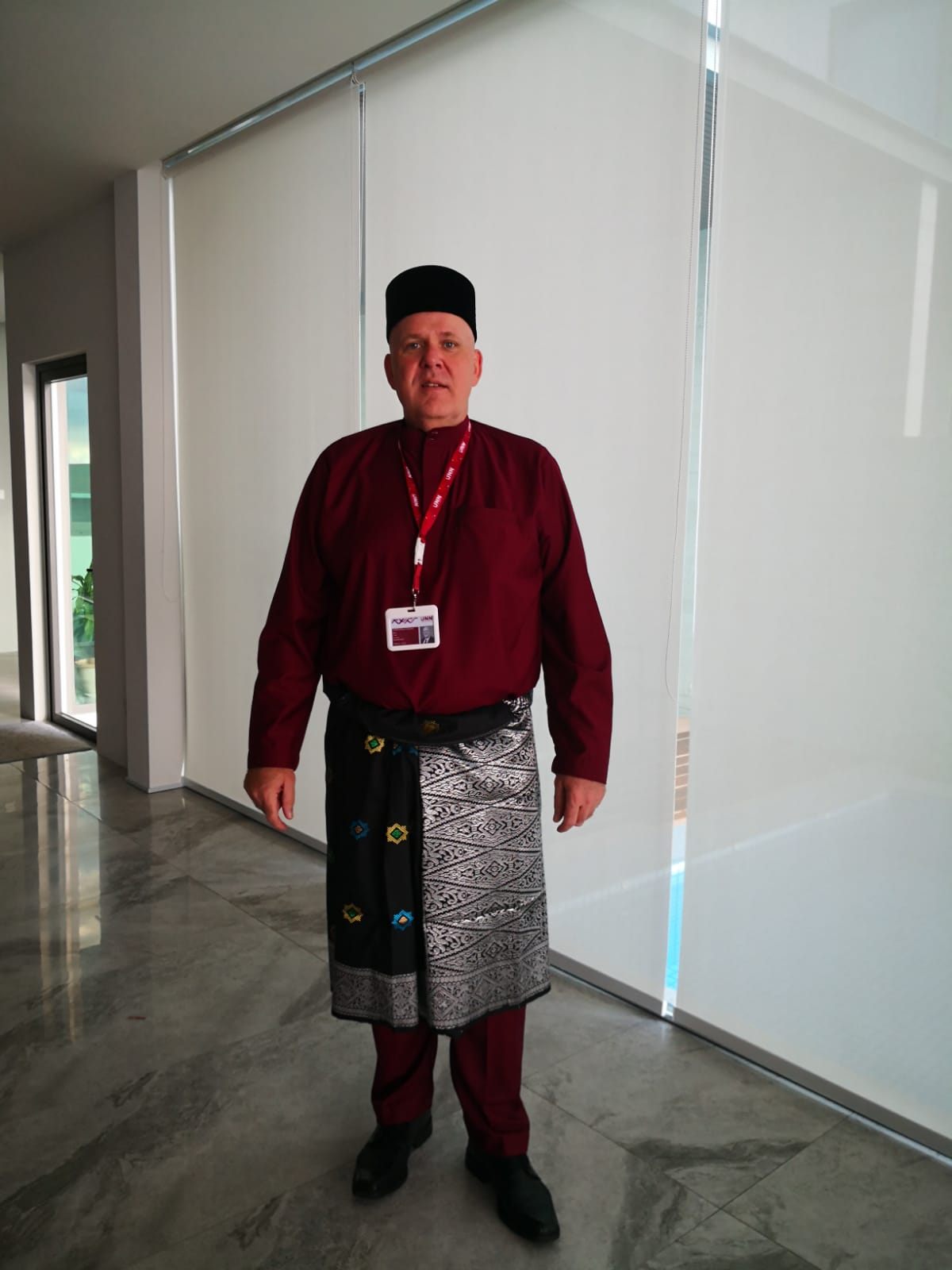
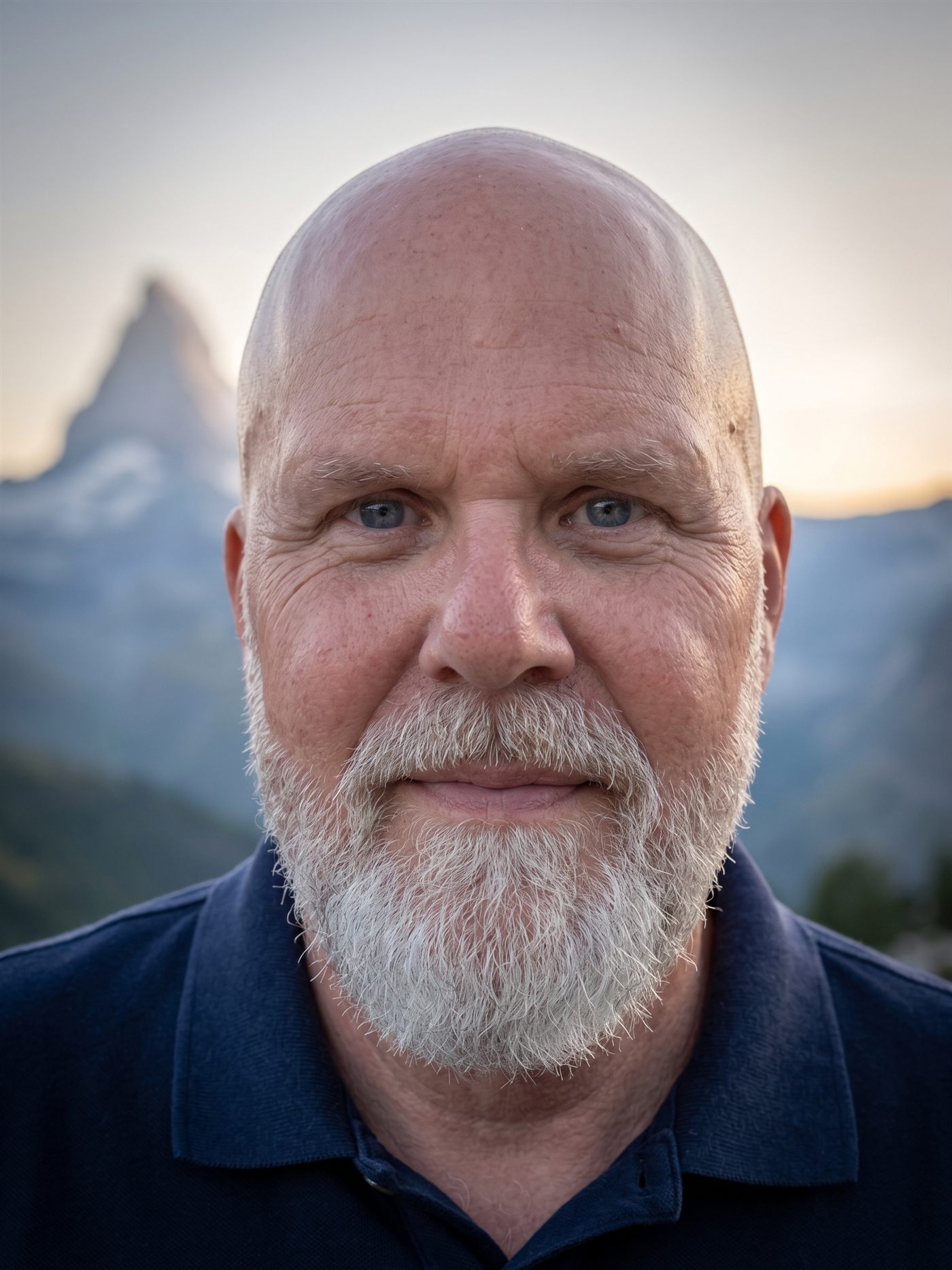
Once upon a time, in a small village in the Rhineland, there was a boy who took radios apart, collected electric shocks, and simply repaired his first computer himself. When he was big enough, he set out to learn fear – just like in the fairy tale he loved best as a child. He found helicopters on bank roofs, tear gas on office roofs and gun barrels at his car window; he found kingdoms, sultanates and a pandemic – and, to be honest, he hardly ever managed to be afraid. This is his story. Everything in it is true. Most of it is still hard to believe. And as in every proper tale by the Brothers Grimm, the fear waits patiently until the very last page.
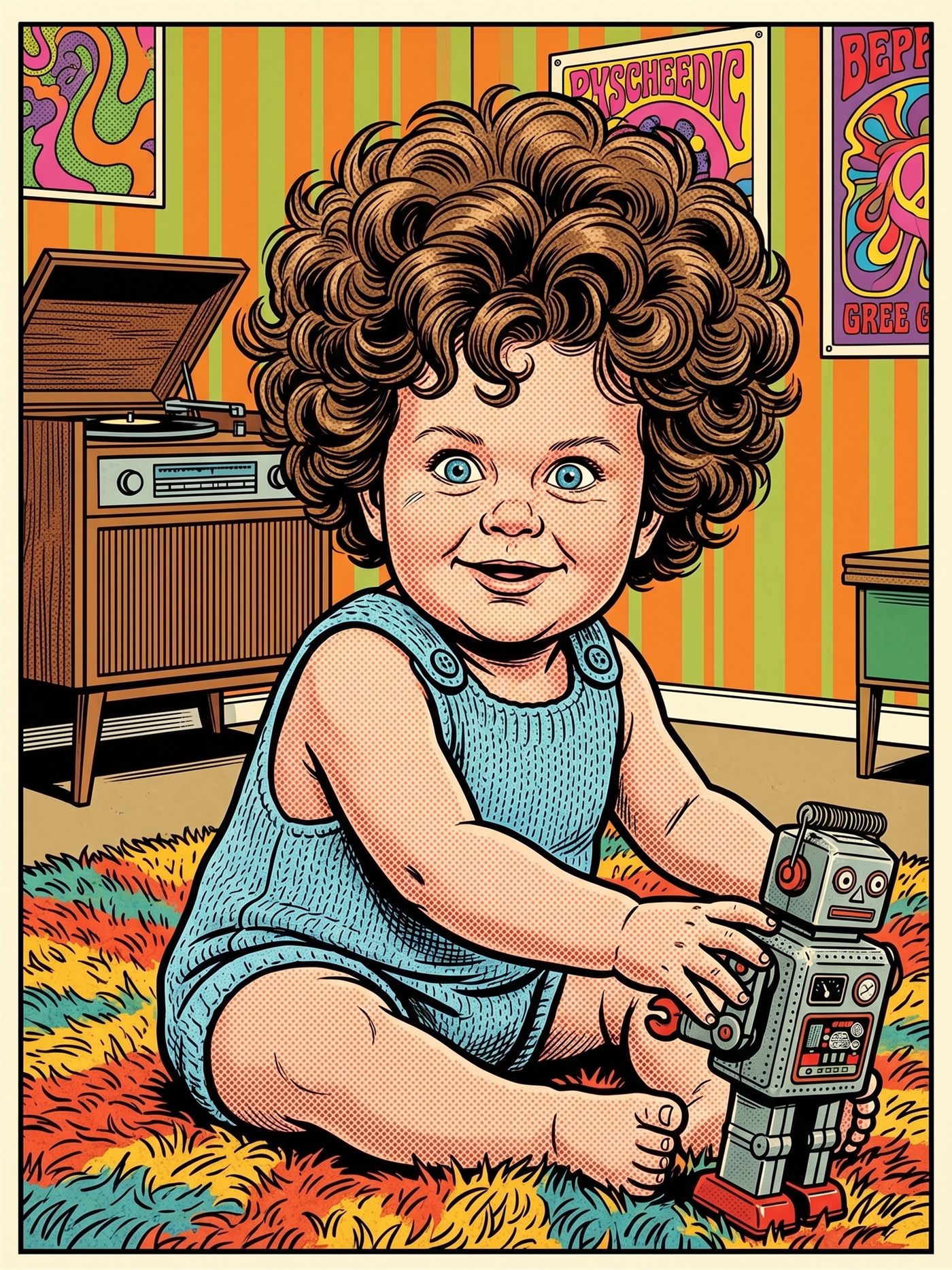
Once upon a time, in a small, sleepy village in the Rhineland, a child was born. The village was called Bad Honnef, the time was the late nineteen-sixties, and the world had other things on its mind: in Bonn, practically around the corner, a young Federal Republic was playing capital city, the Americans were rehearsing for the Moon, and on television – if you had one – the world still came in black and white.
Into this world the child was born, the third of what would eventually be four children of a working-class family. Four boys. You can picture the house. Above all, you can picture the mother.
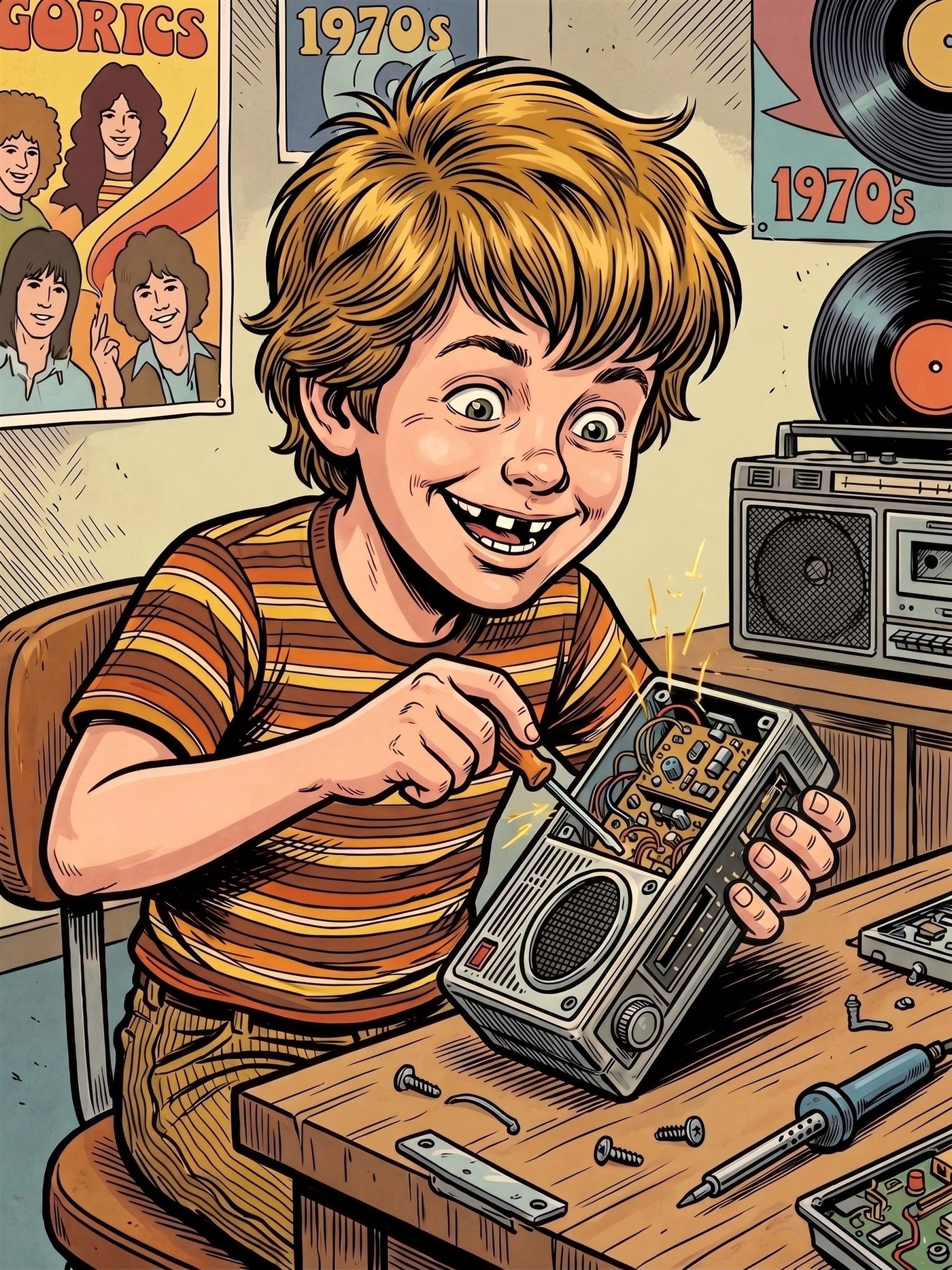
The child was lively, adventurous, and possessed of a quality that parents in the seventies still called "curiosity" and that would presumably get social services involved today: it took old radios apart. The radios did not always surrender their secrets voluntarily – now and then they fought back with 220 volts. These were, if you will, the child's first encounters with capacitors: those treacherous little components that store electricity for the sole purpose of frying curious fingers long after the plug has been pulled. The child survived every shock without any knowing lasting damage, although within the family the word "knowing" remains a matter of open debate to this day.
When the oil crisis came and the autobahns fell silent on Sundays, the Germans roller-skated down empty motorways and the child kept unscrewing things. It had no idea that this unscrewing would one day become a profession. It had no idea of anything that was coming – which was probably just as well.
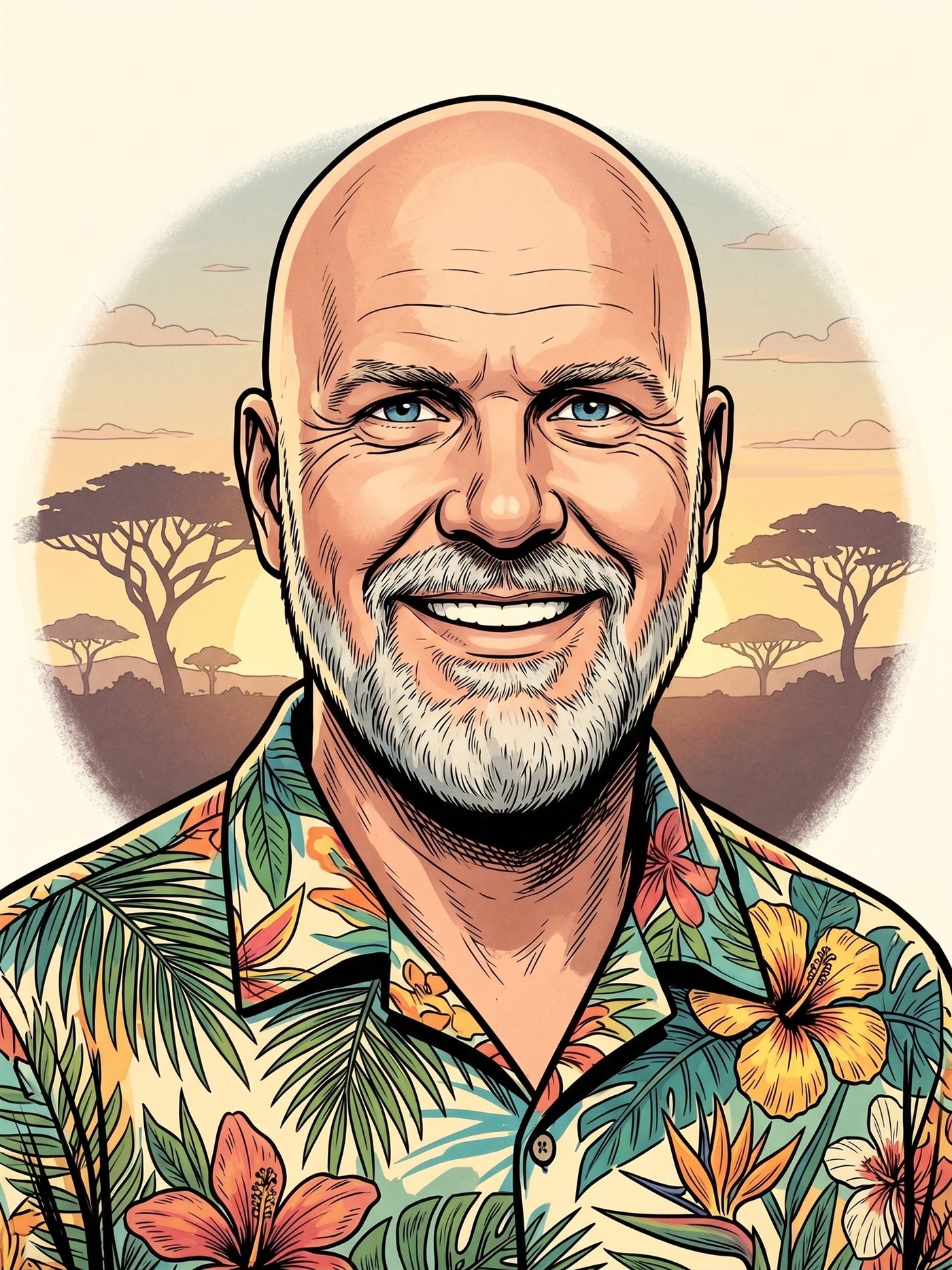
That child was me.
Chapter 2
Electric Shocks and Consoles
The first games console arrived in the house like a miracle: a box with built-in games, essentially Pong in several disguises. Two white paddles, one white dot, one television set – nothing more was needed to leave a boy from the Rhineland thoroughly electrified. Figuratively, for once.
Then came confirmation day. Other children put the money into savings accounts, where the Bundesbank protected it from inflation and the parents protected it from the sons. My confirmation money was – may the Lord forgive me – invested in an Atari console with interchangeable cartridges. It was, one may say in hindsight, the first genuinely good investment of my life. Others would follow, but more on that later.
The first real computer was then a rescue from misery: a broken ZX81, the British wonder machine with a magnificent 1,024 bytes of memory – for comparison: this sentence needs more. I repaired it, brought it back to life, and typed the first lines of code of my life on it. And because a computer without storage is of little use, and because original accessories cost money that no longer existed after the Atari investment, an old cassette recorder was modified until it wrote programs onto ordinary music cassettes. Between Nena and Die Toten Hosen there now lived machine code.
Outside, meanwhile, the Cold War was rehearsing for the real thing, the cinema was showing "WarGames" – a boy with a computer very nearly starts World War Three – and I sat in the Rhineland in front of my repaired ZX81 thinking: the boy in the film clearly had better hardware. Ambition had been awakened.
Chapter 3
The Largest Transformer in the World
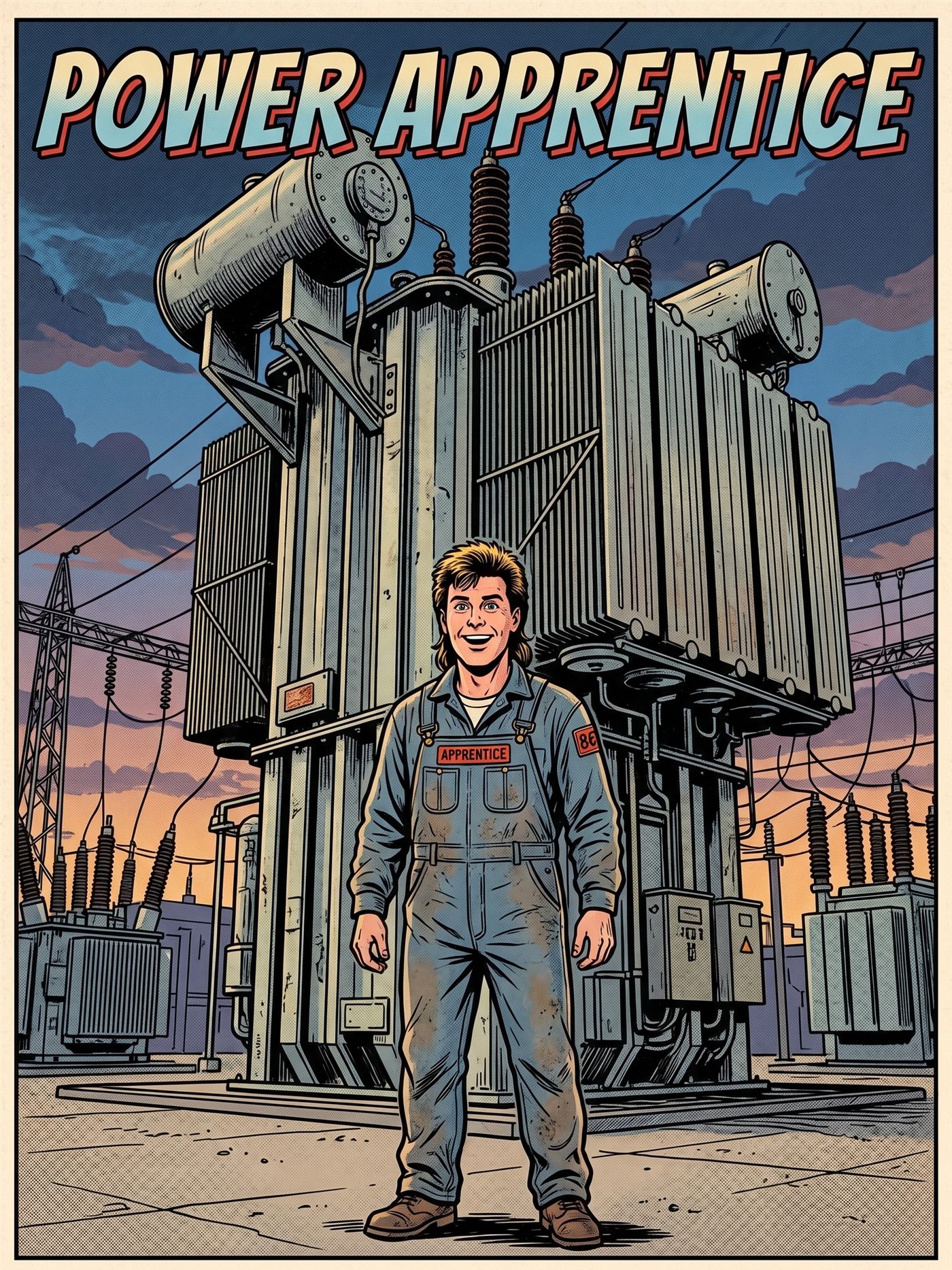
Let us be honest: there was no plan to go to university. There was no plan at all – I had what we shall call a lively youth, a solid school-leaving certificate, and a father who worked in the village transformer factory. One day he suggested I might do an electrical apprenticeship there. I said yes, mainly because no counter-argument occurred to me quickly enough.
It became – to general astonishment, my own included – a triumph. The rebel finished top of his year and was decorated by the Chamber of Industry and Commerce. My parents presumably had to sit down for a moment to process this turn of events.
From the head of the corporation himself there came a reward for it, one that amounted to a knighthood in those days: a programmable pocket calculator by Hewlett-Packard – the noblest specimen its species had to offer. Savour the irony: the boy who had cobbled his first computer together from a broken ZX81 was now being presented with finest computing power – for excellence in copper winding. The device was, of course, programmed immediately. And, of course, not only for sensible things.
The apprenticeship itself was still honest craftsmanship: windings, copper, oil and iron in dimensions you only believe once you are standing in front of them. The story in the works was that we were building the largest transformer ever made – a colossus of several hundred tonnes, created of all places in a sleepy spa town on the Rhine. I never had the claim verified. Some stories are too good to be sacrificed to fact-checking; it is enough for me that I was there.
None of this had much to do with computers – those existed at best in the test bay, where I had occasional points of contact with them, this time without electric shocks. But somewhere between copper windings and test protocols the realisation matured that the end of the apprenticeship could not be the end of the story. Outside, Chernobyl was melting down, Boris Becker was winning Wimbledon, and a global corporation quietly swallowed our traditional factory. The world was evidently in motion. It was time to join it.
Chapter 4
The Middle Way
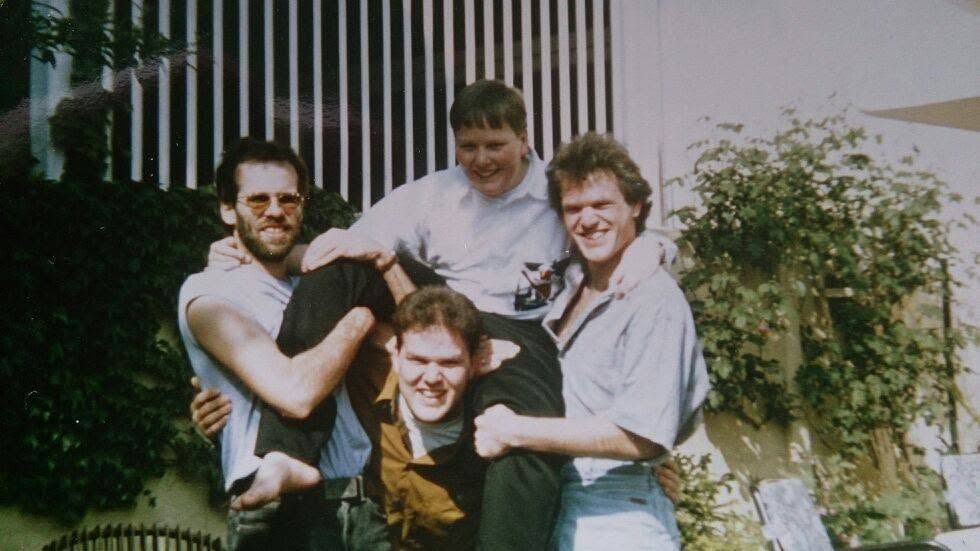
If you grow up in a working-class family with four sons, you learn early that there is a precedent for everything. For university, our family had two: my eldest brother felt drawn to the muses – music, languages, the fine arts. The second eldest became a social pedagogue. You see the pattern: the Beydemüllers were drawn to higher education, but in directions in which one cannot hold a soldering iron. I was the only technician among the brothers, and when I announced after my apprenticeship that I wanted to study, I was at least the first to attempt it with something that smelled of the machine room.
The four Beydemüllers – note: not a soldering iron in sight.
The only question was: what, exactly. Electrical engineering was the obvious choice – I came from transformer construction, after all, and knew what 220 volts feel like. But electrical engineering had one decisive flaw: not enough computers. Computer science, in turn, struck me at the time as the other extreme – plenty of theory, little to hold on to, nothing that could give you a proper electric shock if push came to shove. So I chose the middle way, and the middle way even had its own name: Technical Computer Science, at the University of Applied Sciences in Cologne. Half hardware, half software – precisely my type.
I was ambitious. I wanted to get through my degree as quickly as possible, and I very nearly succeeded – more on that in a moment, for the state had other plans for me.
At home, meanwhile, a technical line of succession unfolded. The Amiga I had acquired was – with all due love – a toy. A magnificent toy, on which I certainly programmed, but mostly things that moved, blinked and counted points. The serious machine was the Atari ST. It became my fellow student, my tool and my laboratory in one: I built it expansion modules on a 286 basis, so that two worlds lived in one case – the elegant Atari world and the grey but unstoppable PC world. There followed my first 486, on which I had my first points of contact with a certain Windows, later a Pentium. My degree added programming languages, including machine-level programming – registers, interrupts, memory addresses. This was no longer a hobby. This was getting down to the marrow, and I found the marrow very much to my taste.
And then, right into the middle of those years, the Wall came down. I remember the images, the people on the concrete, the sheer impossibility of it. I was genuinely happy for them – and afterwards I presumably went to the disco. One must remain honest: politics never particularly interested me. World events ran in my background like a radio in the next room – Reagan, disarmament, reunification. I had other priorities: the degree, the machines, the first girlfriends. That politics would one day take a very insistent interest in me, in countries whose capitals I could not then have named – I had no idea. But that is the thing about the radio in the next room: one day you find yourself standing in the news beside it.
Chapter 5
The Other Side of Life
The state, as I hinted, had other plans. In the middle of my degree I was pulled out for civilian service. Two years. A hospital.
I do not want to spend many words on this time, but the few belong here, for they are part of this story like everything else – perhaps more than everything else.
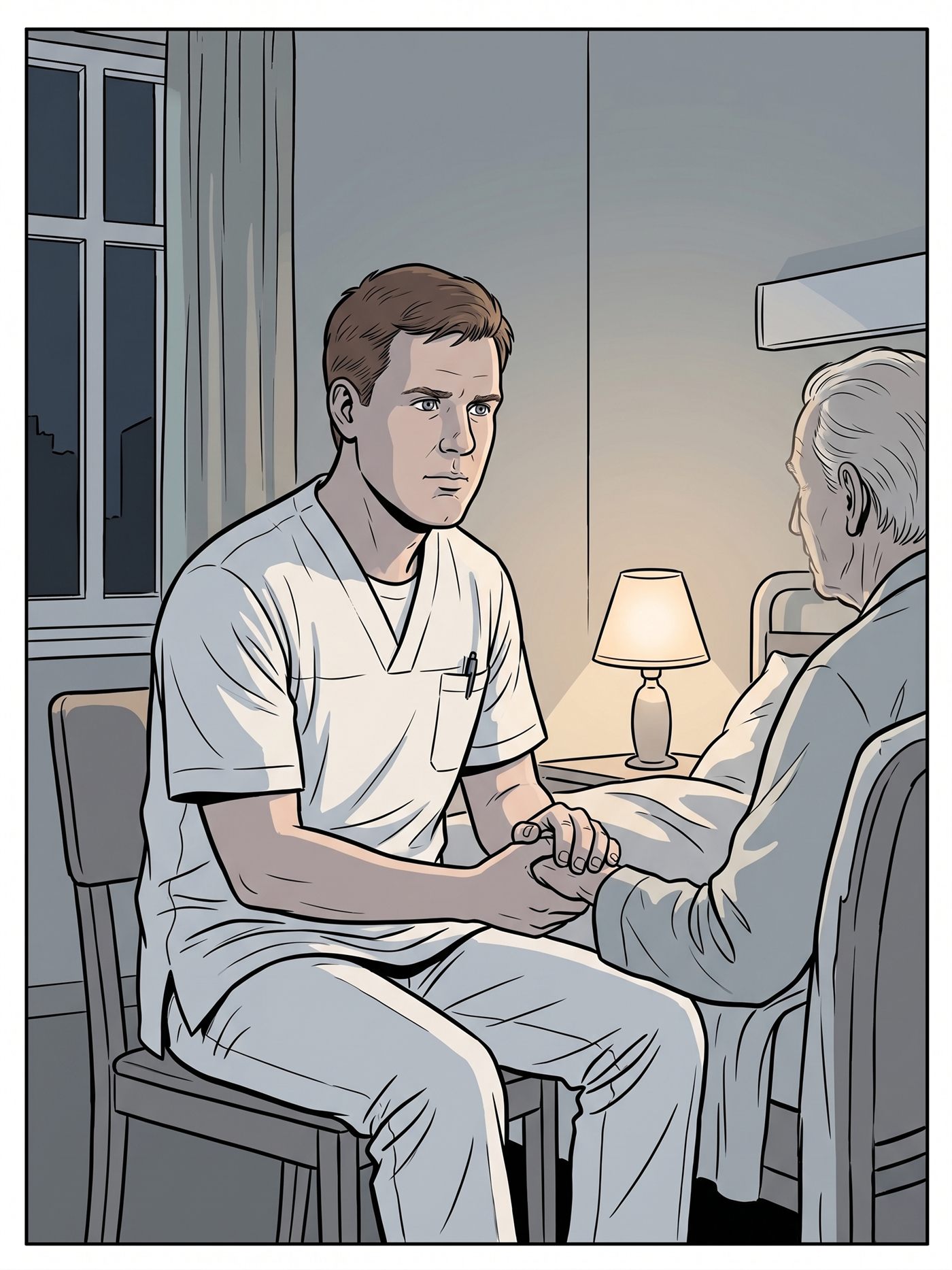
In those two years I accompanied old people into death. I washed the deceased and prepared them for the last visit of their families. And I accompanied the families themselves – the ones who sat by the bed and waited. You were there when words failed, and you stayed when everyone else had long gone home. I was in my early twenties. It was a time when such things were not spoken of – not in the hospital, not at the kitchen table, not anywhere. You did it, and then you carried on.
And the hospital was not the only place where death reached for me in those years. I also lost good friends then – too young, too soon, in ways I will not spread out here: accidents, drugs, and some who left of their own accord. It was a great deal of farewell for an age at which others are furnishing their first flat.
For a young person standing at the beginning of life, it is a peculiar experience to deal with the end of it daily. It shaped me – quietly, thoroughly and forever. Perhaps that is where part of the calm comes from that later helped me in situations where others lost the ground under their feet. Once you have understood how life ends, you negotiate with it differently.
And something else was planted in me in that time, though I could not have named it then: accompanying people through hard passages. It would – in a very different way, in very different contexts – one day become the core of my working life. But I did not learn it in a seminar. I learned it at hospital bedsides.
Today, many decades later, I sometimes catch myself thinking that I now stand on the other side of this life – closer to the end than to the beginning. Then I often think back to that time. To everything that has happened since. And to how quickly, in the end, it went for those I accompanied back then.
Afterwards I returned to university and finished my degree. Life was suddenly in less of a hurry – but I was in more of one.
Chapter 6
Nairobi, Booked Blind
The urge to see the world did not come from nowhere. It had forerunners, and they lay – as is customary for a young Rhinelander – just across the border, in Holland. A schoolfriend was the son of a Dutch diplomat, and so our visits to the neighbouring country always had a semi-official veneer and a thoroughly unofficial programme. Holland offered young people certain attractions in those days that were not available in the Rhineland in quite the same abundance – I shall leave it at this phrasing, and at the observation that we always returned in a state of profound relaxation.
From that phase of life, incidentally, there also survives a tattoo I gave myself. It still exists today, despite all attempts at removal. Some youthful decisions are simply more loyal than others.
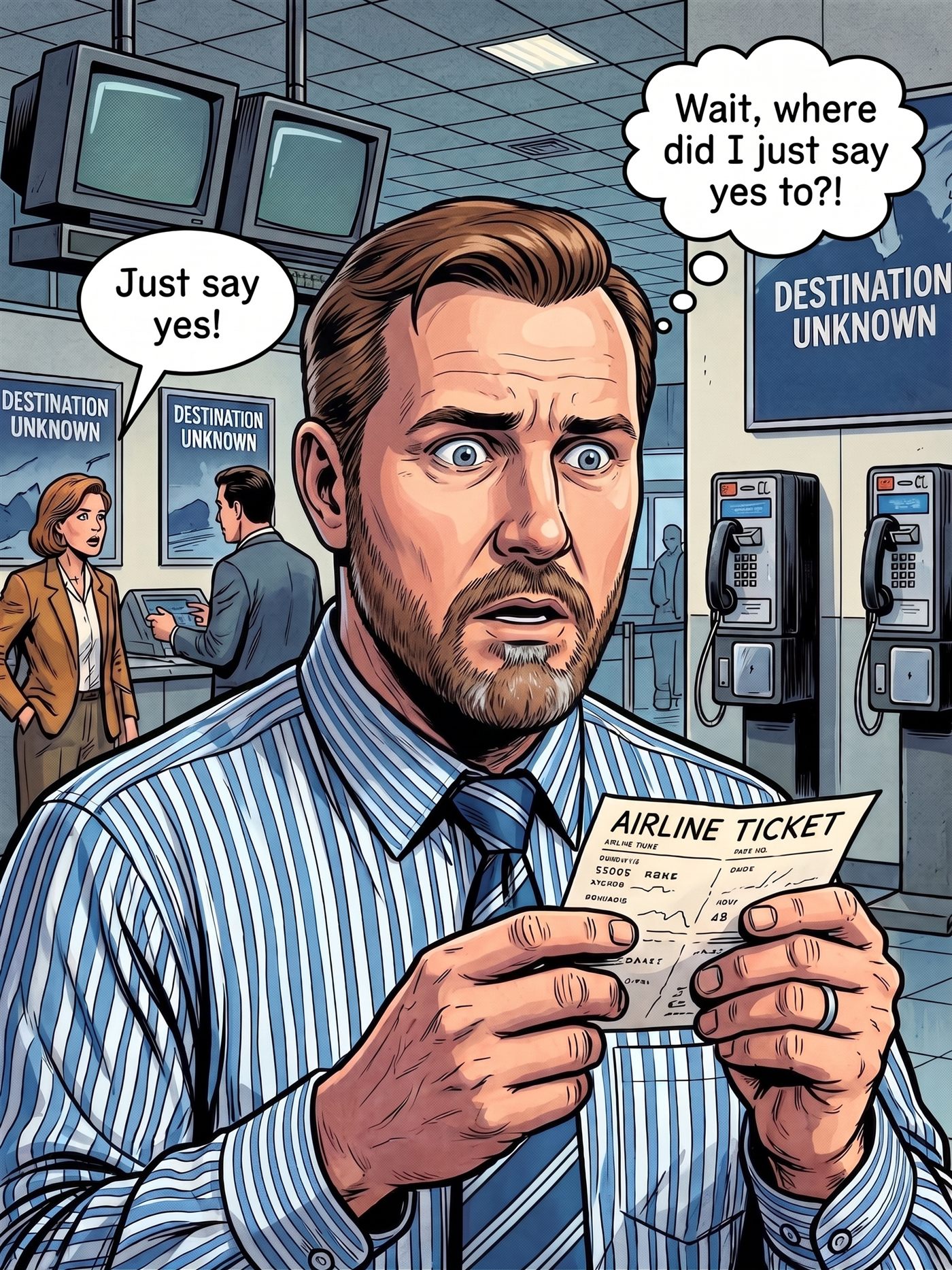
But the first real journey – the one that started everything – worked on a principle I consider underrated to this day: not knowing where you are going. We drove to the airport, the bag was packed, the destination: none. At the counter we booked last minute whatever there was, and even then we did not know where we were headed. Only shortly before departure did we find out: Nairobi. Kenya. We boarded a machine whose best years were visibly behind it, and flew to Africa.
What followed was a shock – and of the variety you do not find in travel brochures. The drive from the airport to the hotel alone revealed a world that had about as much to do with my sleepy spa town as the ZX81 with a mainframe: noise, dust, poverty – and, at the roadside, sights I will not paint here and that one does not forget once one has seen them. I was twenty-and-something years old and sat rather quietly in the back seat.
And yet – or precisely because of it: it would not let me go. Something about this continent, this raw, unfiltered reality, had sunk a hook into me. I did not know then that I would one day spend ten years of my life in Africa. Had someone prophesied it to me on that back seat, I would presumably have nodded politely while searching internally for the emergency exit. But the hook was set.
After that, I was drawn abroad regularly, mostly to Asia, mostly to Thailand – and once through Indonesia with a backpack: by train across Java, by ferry to Bali, from Bali onward to Lombok. All low budget, all improvised, all wonderful.
Lombok, in the process, supplied the story I still tell today when someone wants to know how one travelled in those days. I arrived by ferry; the backpack was the plan, there was no other. At the harbour stood buses. I walked over and asked, in my then still rather broken English, whether one of them went to some beach or other. The driver just nodded. I got on.
In Asia the sun goes down faster than a Rhinelander can think. One moment it was afternoon, then it was pitch dark, and the bus drove and drove. At some point it stopped in the middle of nowhere; the driver pointed to the side and said exactly one word: "Beach!" The door opened, I got out, the door closed. The tail lights vanished around the next bend, and I stood with my backpack in total darkness. But I could hear something: the sea.
So I followed the sound, straight through a thicket in which, in hindsight, all manner of things might have lived – snakes, for instance – a thought on which, in my perfect innocence, I wasted not a single second. Beyond it stood a hut, a little candlelight flickering behind its slats. I knocked. Someone opened. It was, as it turned out, a guesthouse, and there was a room – "spartan" would be an exaggeration. I fell asleep without knowing where on this island I had actually landed.
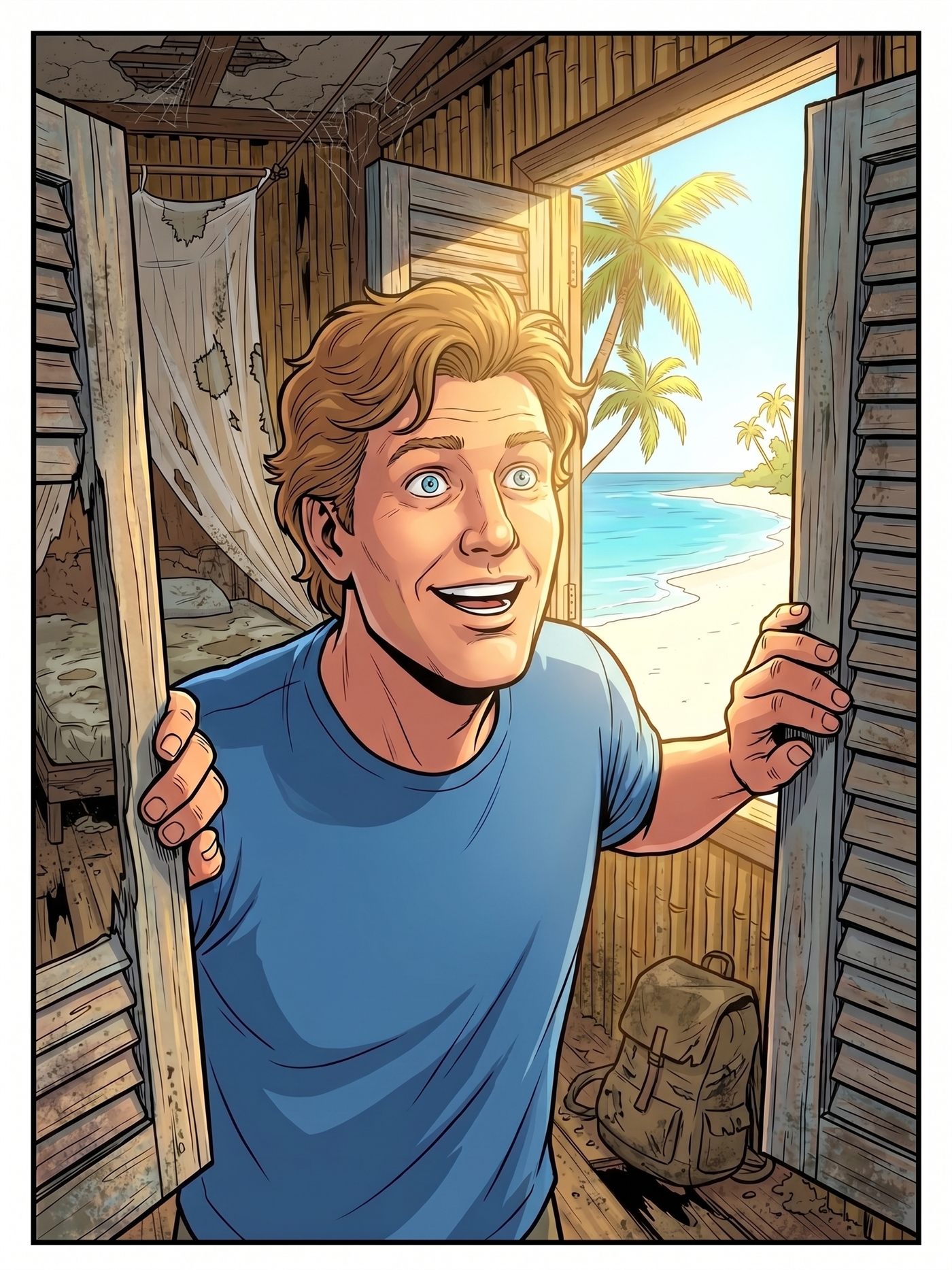
In the morning, light woke me, falling through the slits of the shutters. I pushed them open – and there it all was at once: the sea, a white beach, the sun. I stood at that window and understood for the first time with complete clarity that life occasionally rewards the willingness to board a bus blind in princely fashion. It impresses me to this day.
Somewhere between a Javanese railway compartment, an Indonesian ferry and that window on Lombok, the boy who unscrewed radios became a traveller of the world.
Back in Germany, the degree was waiting. But the bar for "adventure" now hung considerably higher, and the Rhineland, with all due love, no longer cleared it.
Chapter 7
EPROMs, Paragraphs and a Ministry
It came to pass during my degree that a fellow student took me along one day to an engineering firm in Eitorf. Remember this fellow student – he appears in this story again, and the second time he changes it completely.
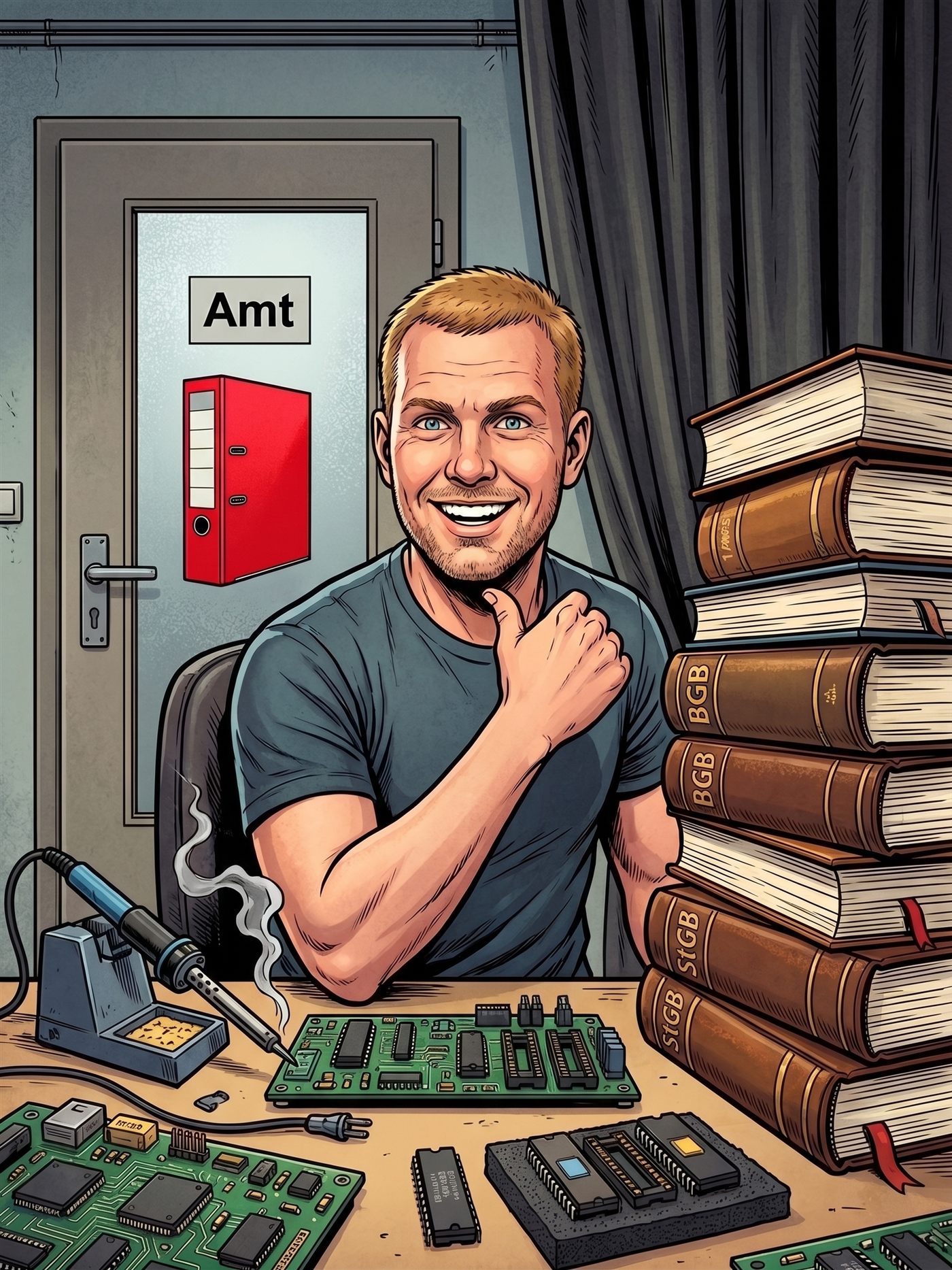
The firm did industrial automation, and for a student of technical computer science it was paradise with an hourly wage: we developed circuit boards, burned EPROMs, built electronics – real hardware for real industrial plants. I came into contact with plant engineering early, was paid decently, and kept myself afloat through my degree that way. While other students waited tables, I soldered. I have never understood why this counts as a stroke of luck rather than the natural order of things: they let me do, for money, exactly what I would have done anyway.
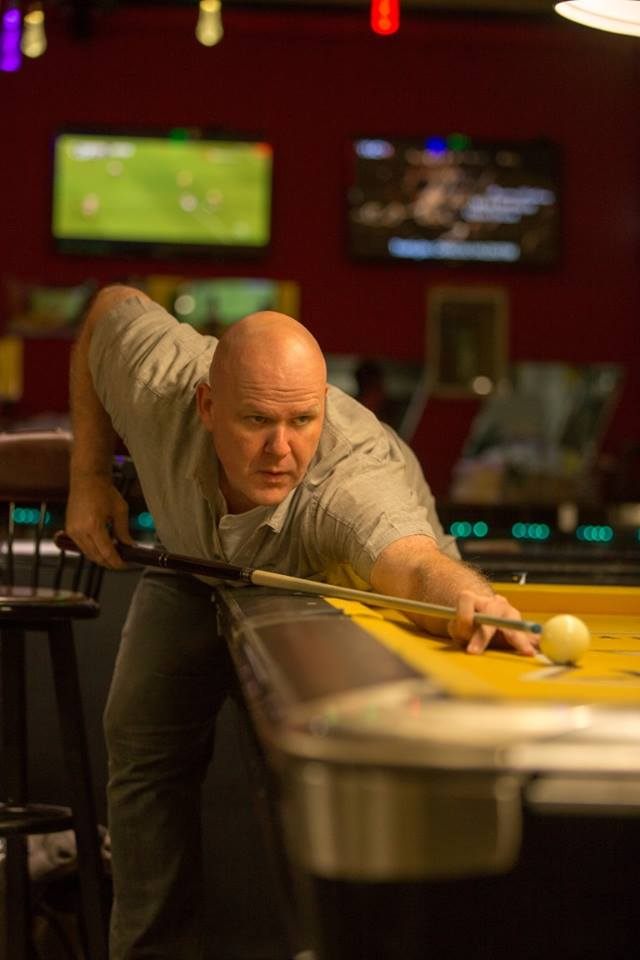
With that fellow student, incidentally, I shared something else that has nothing to do with electronics: billiards. I had played – and watched, with enthusiasm – since I was fourteen or fifteen. But it was he who turned the passion into a discipline: regular play, over the years at a level I shall modestly call a highly developed hobby. I will say no more about it; you know my curtain by now. Green felt, chalk, the dry click of the balls: this became my lifelong companion and – allow me to anticipate – my private litmus test for every new home on this planet. A city in which I could not find a billiard table within reach had not truly taken me in yet. Every one of them, let it be said, eventually passed.
After my diploma there followed a short chapter about which I will – you guessed it – not say very much. For a few months I worked as a software developer for the Federal Foreign Office in Bonn. It was an area one would nowadays file under "security". I underwent a security clearance and was subsequently shown things one did not talk about, and given information one was not allowed to use. That is all this book will say on the matter, and it is all my CV ever said either – to this day the entry reads, laconically: "Details can only be disclosed in an interview." I have always liked that sentence. It is the professional equivalent of a drawn curtain.
One thing, however, may be told, because it explains the road ahead: at the Ministry I worked with people who had spent half their lives abroad. They spoke of postings in distant capitals the way others speak of commutes. The old urge, born on a back seat in Nairobi, was fed generously here.
Then came the Luchterhand publishing house in Neuwied – legal literature, which sounds at first like the exact opposite of adventure. It was not. The publisher stood at a turning point: books were to become CD-ROMs, and CD-ROMs, if you looked closely, something much bigger still. We built an SGML-based engine that generated legal documents from structured text at the push of a button – a machine that understood paragraphs. And because SGML resembles the language HTML to the point of confusion, the next thought was obvious to us while most publishers still considered it science fiction: the same principle, but as web pages. On the Internet. We – half children that we were – had long had this on our radar while "the Internet" was still, for most Germans, a hissing noise in the phone line.
For me personally, Luchterhand was a leap: first object-oriented programming, exceptionally talented colleagues, real software architecture. From Bad Honnef to Neuwied it is only a few kilometres up the Rhine. And yet in that year I felt I travelled further than ever before – only inward, into the machine.
Three stations, three worlds: factory floors, ministry corridors, publishing. What was missing was a place where all the threads came together. It would announce itself soon. More precisely: he called.
Chapter 8
The Spark
The fellow student. I did warn you.
He who had once taken me along to the engineering firm had meanwhile landed at a leading consultancy – its name is of no consequence here; suffice it to say it ran telecommunications projects all over the world. One day he got in touch: "We're still looking for people." What they were looking for was someone for the internal IT, as an administrator. Not exactly the big wide world – but in the job interview a sentence was spoken that decided everything: there would, from time to time, be opportunities to work abroad.
There are moments in which a single sentence throws a spark. This was one of them. The offer was good, I accepted, and in 1997 I started at the consultancy – then still headquartered in Ramersdorf near Bonn, so that my wanderlust and I remained within sight of the Rhine – as an administrator with itchy feet.
The internal IT did not hold me for long. I slid quickly into consulting, and on the side something happened that spun another thread of my life: I inherited a few thousand marks – it really was still the good old Deutschmark – and invested them in the stock market. It was the era in which the Telekom share became the "people's share" and all of Germany suddenly discussed prices the way it otherwise discusses football. What gripped me was less the money than the principle: earning money by doing – well – nothing. Just thinking, weighing, deciding. I thought the idea was magnificent. I think so to this day, and we shall return to it at the end of this book.
And then came the call that pushed the door to the world open for good. A colleague asked: "Do you want to go to Papua New Guinea?" I said yes immediately. Only then did I look up where Papua New Guinea actually is. In that order. I recommend that order expressly, by the way – those who look it up first end up declining.
The assignment revolved around a topic nobody remembers today and that held half the world in suspense at the time: the Year 2000 bug. Nobody knew for certain whether the telephone networks would survive the leap into the new millennium – and in Bonn there was a very tangible interest in an early warning. The beauty of it: Papua New Guinea runs eleven hours ahead. If the networks held at midnight there, Bonn would know by lunchtime what New Year's Eve had in store. And so it came about that I spent the last New Year's Eve of the millennium on the phone, around noon German time, going through with the colleagues in Port Moresby whether the new millennium had arrived. It had. The networks held. The world did not end, and we had been the first to know.
On the ground, matters were less cheerful. Our departure had been postponed at short notice – "don't come for now", we were told, reasons to follow. The reasons we learned only in Port Moresby, and they were of the kind one would rather have known beforehand: armed men had entered our client's headquarters, all the way up to the executive floor. Shots had been fired. Papua New Guinea was considered one of the most dangerous countries in the world at the time, and it took visible pride in living up to the reputation.
How much, became apparent on 17 December 1999, and this time I had a front-row seat. Directly in front of our hotel stood a bank. That morning a helicopter landed on its roof – hijacked, carrying five men in army uniforms, armed to the rotor blades. What they did not know: the police had been tipped off, and undercover officers were waiting inside the bank. A firefight broke out, the robbers fled back to the roof, the helicopter lifted off – and was shot down from the ground. It crashed onto the street. None of the five survived. I witnessed all of it from close range, from the hotel, with a mixture of disbelief and that strange calm that comes over one in such moments. In the evening my then girlfriend called: "You won't believe what was just on television – a bank was raided in Papua New Guinea!" I said: "You won't believe who watched it live."
One might think this would have put me off. The opposite was the case. There was even a second assignment in Papua New Guinea, and I flew – thanks to a miles account and one merciful upgrade – First Class both ways, with stopovers in Manila and Brisbane. Grand cinema, in every sense.
On the flight home, somewhere over the Indian Ocean, the matter was settled. I had tasted blood. Working in Germany? That was not going to happen any more. I had to get out into the world.
Chapter 9
Africa I: Dar es Salaam
The world did not need to be asked twice. In the early two-thousands I went out properly for the first time – not on a journey with a return date in the diary, but to a post: Dar es Salaam, Tanzania. TTCL, the country's national telephone company, was looking for an Operations Manager. It became barely twelve months. A short chapter, then – and yet the one in which everything that followed was already laid down: my first position abroad, my first African telephone company, and the beginning of those ten-odd years that would stamp the continent on my forehead.
I lived in a flat I could not have invented: right on the sea, and so directly on it that in rough weather the water struck the living-room wall. My landlord owned a catamaran; at weekends we sailed out. The boy who twenty years earlier had converted cassette recorders into data storage now sat on a catamaran off East Africa and found it, he must admit, entirely acceptable.
And then the safaris. Until then I had seen animals in zoos, on television, in books – and was wholly unprepared for what it does to you to meet them in the wild: the drives north, Arusha, the Ngorongoro Crater, that vastness in which one stops regarding oneself as the measure of things. Once our car gave out in the bush, in the middle of the night, and within a short time the hyenas stood in a ring around us. I record for the sake of completeness that even on that night the feeling this book carries in its title declined to appear reliably. It was simply too magnificent.
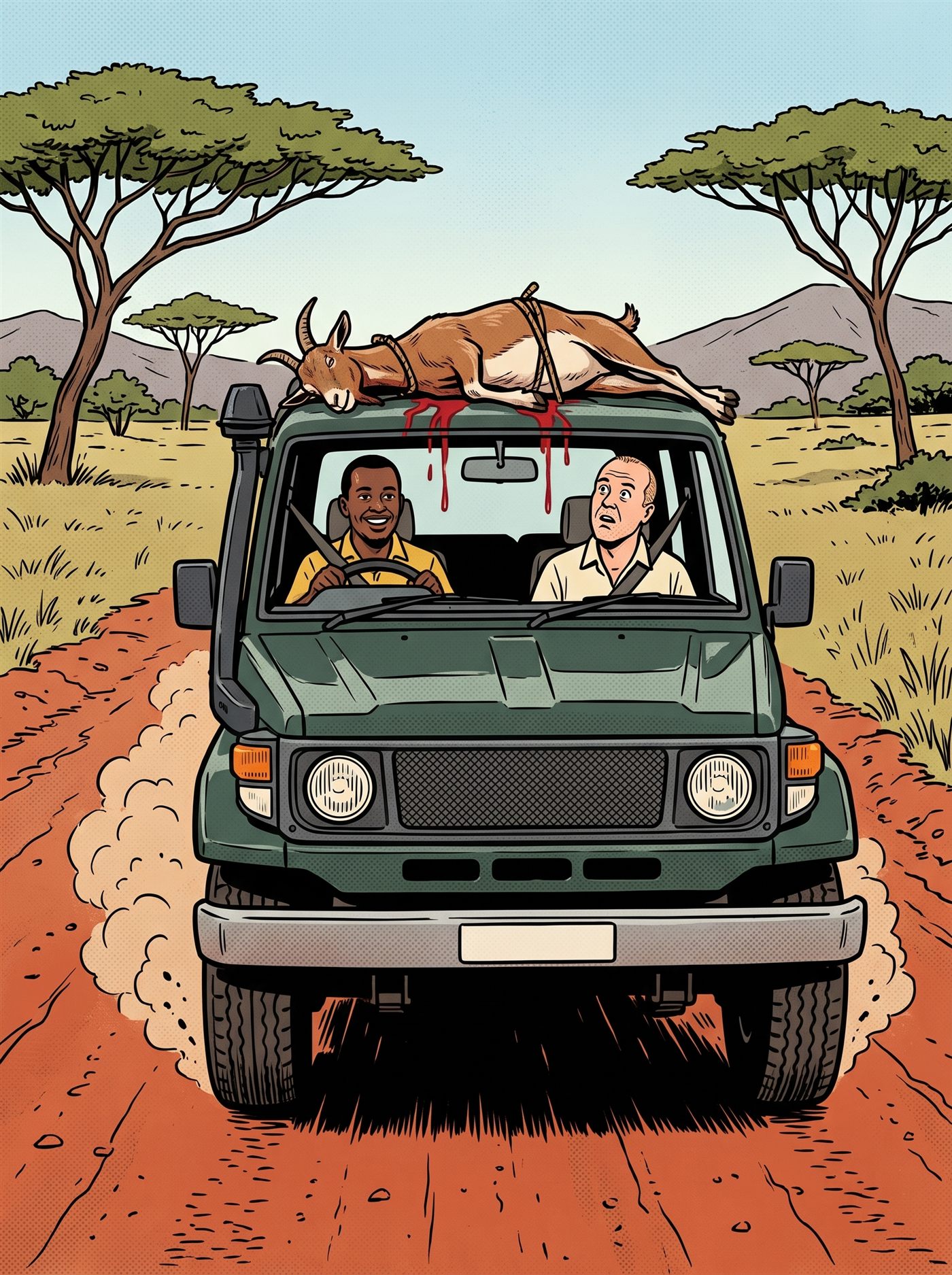
And then there was the excursion I have told at every other dinner ever since. A local friend took me with him to his village. On the way we stopped somewhere; there were mud huts, a fire, dancing – no folklore show for tourists, simply life as it was lived there. I stood beside it and grasped how far a Rhinelander can travel without leaving the planet. On the way back from that same excursion my friend asked me casually whether I would mind if he took a goat along. I pointed out that a goat is difficult to fit into a car. "No worries," he said, "it's dead." Well then – some meat, why not; I merely expressed the hope, out loud, that it would not spoil on the way. Precisely for that reason, he explained patiently, it goes on the roof. And so we drove home: with a goat on the roof, so freshly killed that its blood ran down the car windows in thin ribbons. I sat beneath it and grasped the lesson of that day: what to one man is an unimaginable experience is to another simply the weekly shop.
After barely a year the assignment was over and I flew back. What remained was neither a reference nor a promotion, but something more stubborn: Africa had taken hold of me and would not let go. I did not know then that I would return. I only knew that I wanted to.
Chapter 10
Africa II: Kampala
I came back sooner than I had expected. In 2003 the consultancy sent me to Kampala, Uganda – initially as Security Manager at the national telephone company. The planned months became, in the end, five or six years, and the Security Manager became something I had never planned: when the then CIO – also a man from our consultancy – left the project, it was the client itself that pointed at me. They had evidently arrived at the view that the ideal candidate for the role was already in the building. I did not contradict the view. And so the boy from Bad Honnef was suddenly Chief Information Officer of an African telephone company, with a real budget, real responsibility for people, and a desk at which the problems were no longer practice exercises.
I learned two things about myself in those years. First: I am good with people. Whatever "empathy" is exactly – there seemed to be enough of it that people liked working with me, across all cultures and hierarchies. Second, and this surprised me: power does nothing for me. The title, the company-car gravitas, the boss act – none of it stuck to me. When the chapter ended years later and I became an ordinary consultant again, I felt it neither as a demotion nor as a relief – I have never run from responsibility. It was rather a confirmation of what I am at the core: the boy who tinkers with radios. No more, no less. I had proven that I could do the other thing – and understood that I do not need it to live. I believe that combination is rare, and I believe it has opened more doors for me than any diploma.
In Kampala, something else acquired a name that would accompany me through every station from then on and grow with each one: the passion for not merely designing strategies but executing them. Paper is patient; organisations are not. A strategy on slides is a promise – it gets interesting where the promise has to become reality. And reality it becomes exclusively through people: the ones who doubt, who are afraid, who have lived through three failed reorganisations already and wave the fourth away wearily. Carrying precisely these people through change – that became my craft, and the back seat in Nairobi, the hospital, the empathy I just spoke of: in hindsight, it had all been working towards it.
My principle then was the same as it is today: wherever I am, that is home. Whether one month or five years – from the first day I try to live there, not just work. In Kampala that meant: living close to the locals, immersing myself, belonging – and, naturally, establishing without delay where the nearest billiard table stood. The litmus test, you remember. Kampala passed it effortlessly.
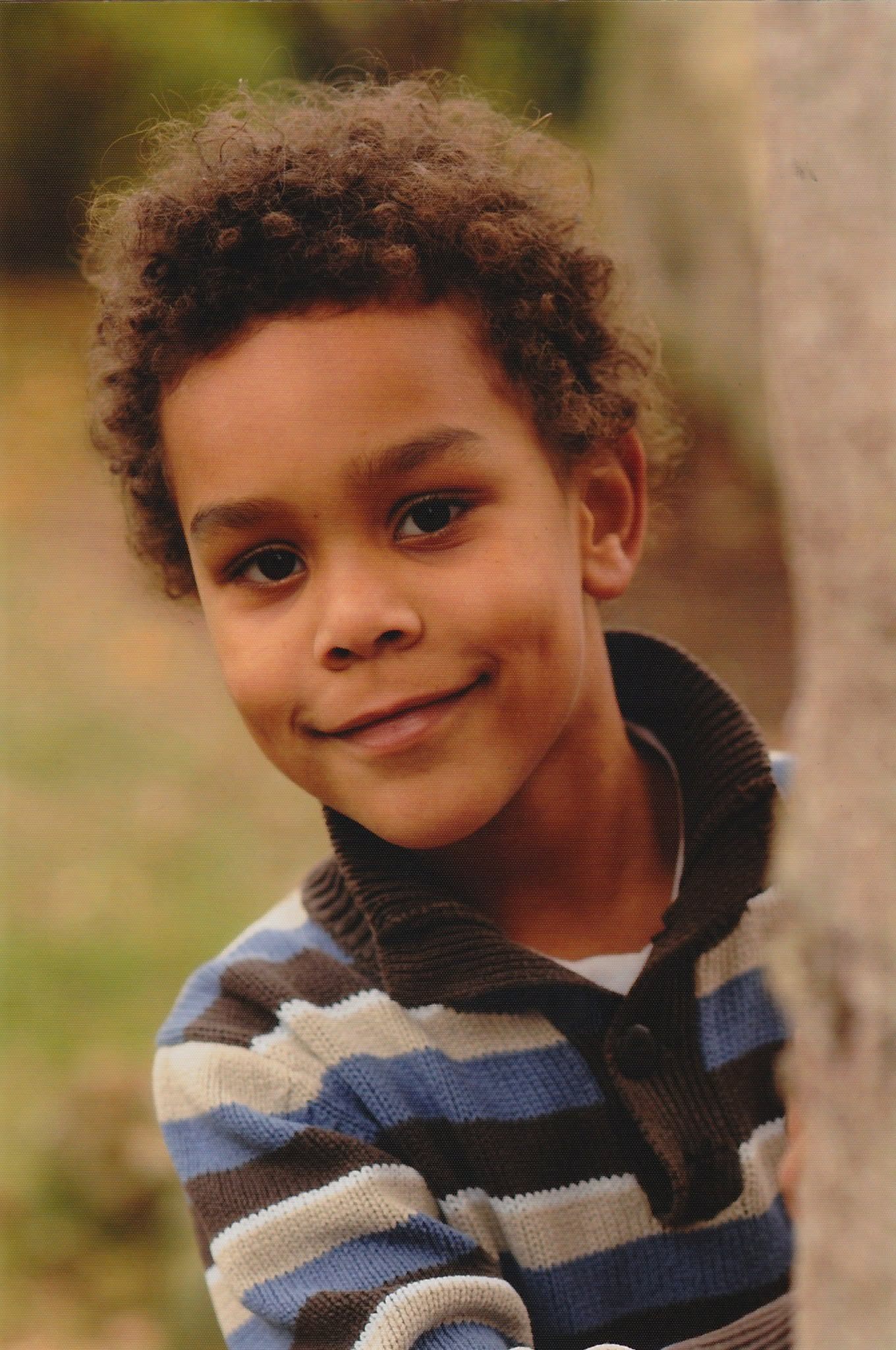
It went so far that my first son was born there: Kian – half Rhinelander, half Ugandan, and blessed, if you ask me, with a very healthy skin colour. The relationship did not last, but Kian remained. He is today a young man who studies in England, visits his father regularly – and of whom I am endlessly proud.
Kian.
Not much more family appears in this book – only this: my mother visited me in Uganda several times, and I believe she understood things there about her third son that had remained a mystery to her in the Rhineland.
And into those years also fell the death of my father. He went far too early. The man who had once brought me into the transformer factory with a casual suggestion – and had thereby, without suspecting it, set this whole story in motion – was not granted much time to watch it leap across the continents. I was far away when it happened. It would not be the last time life presented me with that particular bill – but of that, elsewhere. Here let it only be said: he is missed.
Uganda itself I like to tell in two pictures.
Picture one: a friend had inherited a coffee plantation from his father, who had died shortly before – far out, in a remote village – and wanted to show it to me. We arrived only at night, and on the way he calmly explained the situation to me: his father had by no means had only friends; on the contrary, there had never been a shortage of enemies. We had better not stand still anywhere for long – it would, and I quote, not be surprising if someone wished to do us harm. With this bedtime story in our ears we moved into the house, and before going to sleep I was shown, with a straight face, where the bow and arrows lay – for defence, should someone break in during the night. I slept, let us say, attentively that night. At the gate, my host had earlier been loudly annoyed that the security guard took an eternity to open. The next morning I saw the property in daylight: there was a gate, a stately one at that. To the left and right of it there was – nothing. No wall, no fence, open meadow. You could have driven past it with a coach. To this day I ask myself what the gate was for, what the guard was for, and why, all things considered, the bow and arrows were not simply leaning against the gate. Africa set me many riddles. This one is my favourite.
Picture two is less cheerful. There were elections, and elections there were never merely elections: there was unrest, burning vehicles, smoke over the city. The telephone house of a telco is, in such moments, not an office building but strategic terrain – who controls communications controls a great deal. One day insurgents forced their way in downstairs while we were working upstairs. On the roof you could smell the tear gas of the police trying to keep us clear. We came away unharmed. But in those days I understood for the first time in my own skin what I would experience often enough later: you may be as uninterested in politics as you like – if you work close enough to a country's infrastructure, politics will eventually take an interest in you.
In between, life was often simply wonderful. Kampala was a warm-hearted, lively city in which one could move freely. Even the fellow student – you remember him – kept up his finest tradition: he visited me every year on my birthday, wherever I happened to be. If need be, in Kampala. Such friendships can withstand continents; remember this too, it will matter later. For the 2006 World Cup I set up a projector at home, the African friends and colleagues came, Germany played its way into its summer fairy tale, and we celebrated in Kampala as though the village on the Rhine were just around the corner. And when a certain telephone came onto the market in 2007, I soon held my first iPhone in my hand – in East Africa of all places, in the middle of the greatest mobile boom a continent has ever seen. For the boy who once unscrewed radios it was doubly surreal: a computer, a telephone and a window onto the world in one palm – and all around, a continent that simply skipped the landline and dialled straight into the future. To stand in the middle of it as CIO was paradise. A strenuous, responsibility-laden, occasionally tear-gas-scented paradise – but paradise.
Chapter 11
Interlude in Four Countries
In 2008 the Kampala chapter ended, and I did something that career guides presumably classify as a mistake: I gave up the C-level post and looked forward to it. No driver, no antechamber, no five hundred petitioners – being an ordinary consultant again, solving a problem, moving on. I have not regretted it for a second. Anyone who has ever felt how lightly a backpack sits once the desk has been handed back will understand immediately.
The new project was called "Harmonized Contracts and Pricing" and belonged to T-Systems: a large international transformation aimed at unifying contracts and pricing models across borders. I was deputy programme manager, and my beat was Austria, the Netherlands, Great Britain and the Czech Republic. It was the time after the financial crisis; Europe was sorting itself out anew, and I sorted along – contracts, prices, processes, country by country. It was the next great transformation in my collection, and the pattern confirmed itself: many people can design strategies. Carrying them through an organisation – through resistance, fatigue and the quiet fear of everyone involved of being rationalised away at the end – that is the real craft. It has never let go of me since.
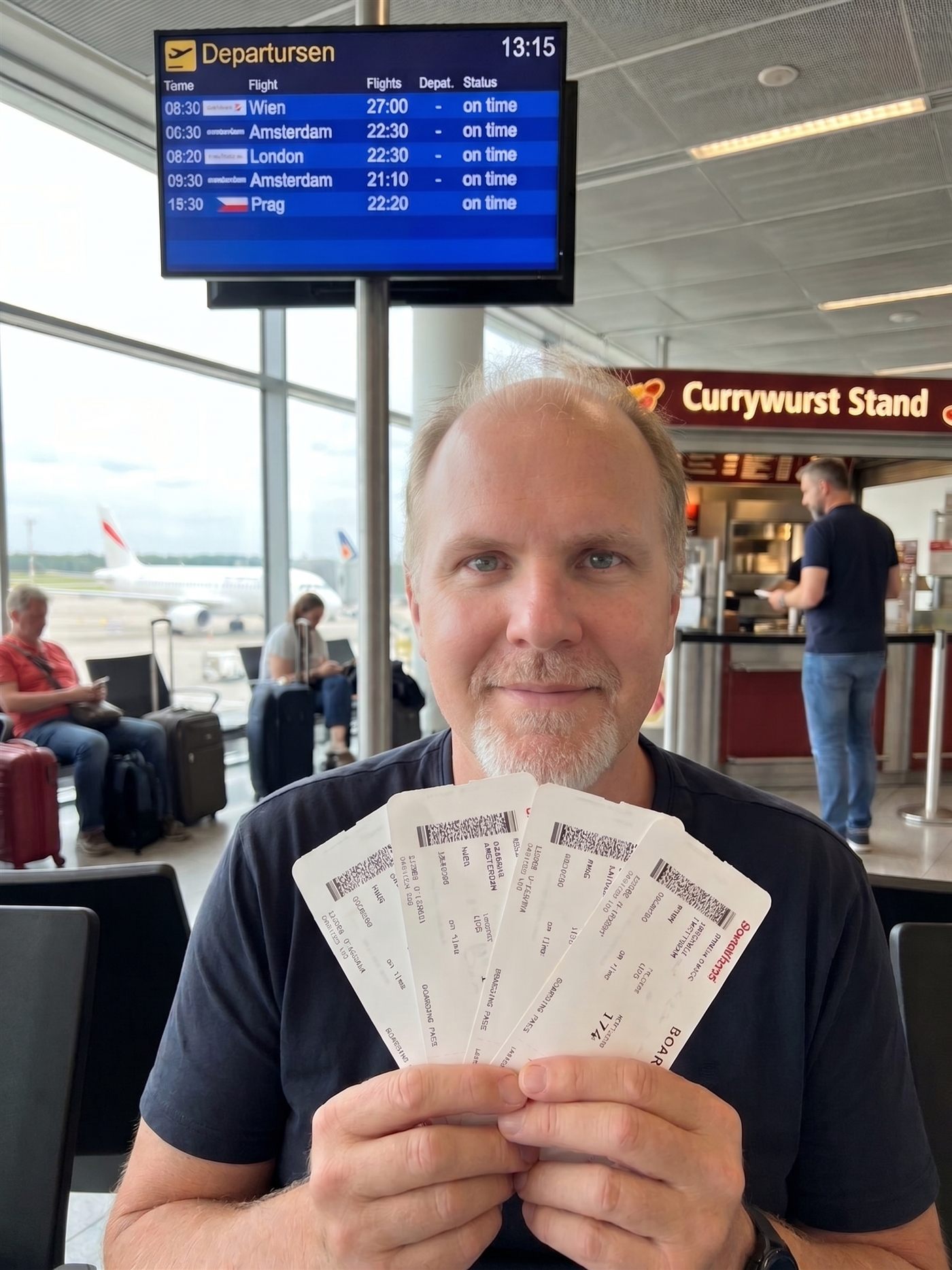
After the Ugandan years it was an almost comically orderly life: Monday airport, weekdays Vienna or Amsterdam or London or Prague, Friday back, weekend at home. No tear gas, no bows, no arrows – the greatest danger was a missed connection. And yet it was exactly right: I was closer to my son again, saw him regularly, and became acquainted with a species of abroad that begins with currywurst at the airport and ends with room service. Abroad light, as it were. It was to remain a breather – the world had not hooked me so that I might contemplate it from conference rooms with views of other conference rooms.
The breather ended with a sentence I recognised by now. The project was still running when I was asked whether I fancied going to Africa again. I had, so I was assured, "the Africa stamp on my forehead" – evidently perfectly legible. And the next destination was a serious one.
Chapter 12
Africa III: Luanda
Angola. Four years. And with it a city that in those years held two superlatives simultaneously: Luanda was the most expensive city in the world – ahead of Tokyo, ahead of Geneva, ahead of everything one thought possible – and at the same time one of the most dangerous. The oil boom was pumping money into a country in which the civil war had only just become history; in the supermarket an imported cucumber cost what lunch costs elsewhere, and the shelves were often empty regardless. Champagne was almost always available. Priorities.
I came as technical project lead for a large transformation at the state telephone company – once again a new country, once again everything new: new culture, new rules of the game, and with Portuguese a language of which I command a few polite scraps to this day. And, for the first time in my life, a city in which fear was part of everyday life like the weather.
The consultancy granted its Africa veterans an apartment of their own – and by now I counted as one of them; the other colleagues had to stay in the hotel for safety reasons. For me this was no footnote but a matter of principle: whoever lives in a hotel is visiting. I wanted, as always, to be at home. So: apartment, routine, life – with everything that belonged to it in Luanda. And belonging to it, the litmus test could not have arranged it more kindly, was a properly good billiard bar almost within walking distance of the apartment: plenty of tables, good cloth, everything that goes with it. Luanda had passed the test at a stroke.
Part of it was also this: you sit in traffic – and in Luanda you always sit in traffic – and your gaze goes automatically to the rear-view mirror. Every motorcycle threading its way forward between the cars is a candidate. The usual procedure was efficient and almost businesslike: two men on the machine, they draw level with you, a weapon shows through the window, the window comes down. For these encounters there existed a protocol every expat had mastered: always a hundred dollars in the breast pocket, always an old telephone within reach in the car. Hand it over, nod, drive on. The gentlemen were in as much of a hurry as oneself – it was, if you will, the fastest transaction in town, and both sides knew the exchange rate. It happened to me more than once. Including with the gun right at my head. I tell this today with a smile, and that is not repression but the actual souvenir of those years: in Luanda I learned to deal with fear. It was there, every day. You negotiate with it, you hand it its hundred dollars, and then you get on with your work.
Africa also exacted a physical toll this time: in Angola I had my first malaria. It shook me thoroughly and reminded me that the most dangerous inhabitant of the continent carries no weapon and rides no motorcycle, but hums.
Professionally it was a ride through a system in which corruption was not a scandal but the prevailing climate, and in which politics – as always – stood in the room even when it had not been invited. One learns to move without bending: there are hands one shakes, and hands into which nothing must ever be placed, and the art consists of knowing the difference before extending one's own.
How dangerous Luanda really was can incidentally be read off a single personnel decision: the fellow student's annual birthday visit – that tradition which had survived three decades and one continent, and which had not even flinched at Kampala – ended with Angola. Without comment. Nor has it been resumed since, which I do not hold against him: there is no more honest travel advisory than the most loyal visitor in the world simply ceasing to come.
And yet – this too belongs to the truth: Luanda was not only fear and rear-view mirrors. It was also a party town, loud, hungry for life, full of music, the way only cities are that know how quickly everything can be over. And there was, of course, the billiard bar around the corner – the place where fear took a break: bent over a shot, you are for once not looking in the rear-view mirror.
Luanda – fear, taking a break.
Kampala was the city where one moved freely; Luanda was the city where one knew precisely where not to. Between the two lay an entire continent of experience.
After four years, at the end of October 2014, I packed my suitcases. Nearly ten years of Africa now lay behind me – Uganda, Angola, in between detours to Kenya and several times to South Africa, which are permitted to pass through the picture here only as subordinate clauses, because that is what they wanted: short episodes, friendly footnotes. The continent that had set a hook in me on a back seat in Nairobi let me go. But it remained, as hooks do, well anchored.
What I did not know then: the next chapter would begin not with a country, but with a person.
Chapter 13
The Hollywood Weekend
Coming straight out of Angola, the dust of Luanda still in my luggage, I was sent to Jakarta for a short assignment. October to December 2014, home for Christmas, then straight back for a few more months – Indonesia, the country of my old backpacking tour, this time with a suit in the case. It was only a brief episode, a few months between two great chapters. But brief episodes have a habit, in my life, of being the most important ones: in Jakarta I found the love of my life. You will get no details from me – you know my curtain by now. But those five words shall for once stand unfogged, for I cannot put it more precisely. More on this later.
Jakarta.
And incidentally I came closer there to the consultancy's Asian management, seated in Bangkok. That too was a seed that would sprout.
First, however – I was in my hotel room in Jakarta at the time – Switzerland rang. The SBB, the Swiss Federal Railways, were looking for someone to run a system at which a German's breath catches in reverence: the Rail Control System, the central control of Swiss rail traffic. I did the interview by phone from the hotel room, between Jakarta's permanent traffic jam and the hiss of the air conditioning. They were, apparently, taken with me.
What followed was the most logistical weekend of my life, and I like to tell it in the rhythm of a film trailer: Friday evening, departure Jakarta – for want of any other bookable connection, via Taiwan, because if one must hurry, then by all means the scenic route. Saturday afternoon, landing in Germany. Suitcase one unpacked, suitcase two packed. Sunday, flight to Switzerland. Monday morning, with a jet lag of what felt like three time zones at once, first day of work at the SBB in Bern. Hollywood could not have cut it tighter.
What the trailer leaves out: on the Saturday evening I squeezed in a dinner and a trip to the cinema with my eldest brother. Middle Eastern at the restaurant, science fiction at the cinema. We watched "Interstellar" – my favourite film, which by then I had already seen five times in cinemas in Jakarta, because it had moved me so much that I wanted to be certain I had actually understood it. That sixth viewing was not to be the last; more followed, later together with my son Kian, who is no less gripped by the film than I am. Whether I have "already" understood it remains, to this day, an open question.
And then: Bern. After Kampala, Luanda and Jakarta, Bern was a city like one long, calm exhalation. Everything worked. Everything was clean. The trains ran – of course they ran, I was helping now – to the minute. After cities where traffic was a contact sport and electricity a matter of negotiation, this leisurely perfection struck me as almost exotic. I came to love Bern – its arcades, its river, its tempo – and I love it to this day.
From April to the end of December 2015, some nine months, I helped keep the nervous system of the Swiss railways running – agile, highly complex, and with a fault tolerance tending towards zero, because this country regards delays not as fate but as scandal. It was great, concentrated work with great people.
Towards the end, the head of our Swiss country organisation made me an offer: stay. Join us. Switzerland, one must not forget, is after all a foreign country for a German – it would have been no betrayal of the life motto. But it was too early. For there was this story that had begun in Jakarta. And there was Bangkok calling – our Asian branch was looking for reinforcements, Asia suddenly lay on the table again, and something stirred in me that had been waiting patiently since the backpack tour across Java.
I declined the Swiss offer – politely, gratefully, and in complete ignorance of the fact that I would accept it after all eight years later. Some offers are like the tattoo from my youth: you simply cannot get rid of them. With the tattoo, this annoys me to this day. For this offer, I would one day be very thankful.
Bangkok, then. Asia. This time properly.
Chapter 14
Bangkok, Married to the Sound of Thai Boxing
In 2016 I moved to Bangkok, to our consultancy's Asian headquarters – and it felt like a flashback. The early journeys, Thailand, the ferries to Bali: Asia had enchanted me as a young backpacker, then ten years of the Africa stamp had kept me away from it, and now here I stood again, this time with a business card. It fitted privately, too: Jakarta, where the aforementioned story was unfolding, was a stone's throw from Bangkok – at least compared with everything that had lain in between before.
Bangkok as a place to live deserves a declaration of love of its own. I know no city that holds so much life in so little space: temples beside tower blocks, street kitchens beside rooftop bars, millennia beside neon. Whatever one's head happened to demand – culture, modernity, nightlife, silence – it was at most a taxi ride away, and usually not even that. I enjoyed the quality of life of this city to the fullest and, along the way, learned another continent's worth of culture.
The work radiated out from Bangkok across half the region: due diligence in the Philippines, where two telecom giants were merging their networks; a major OSS project in Kuala Lumpur; the merger of two state-owned companies in Bangkok itself; Singapore in between, and – for completeness, as a subordinate clause, as promised – a few more weeks of South Africa. Out in the world, meanwhile, Great Britain voted for Brexit and America for Donald Trump; I followed both from tropical distance with the mild astonishment of a man who had learned that politics finds you anyway, whenever it needs you.
Out and about in Asia.
And then the next great chapter began to take shape: Brunei. A small, very wealthy, very Muslim sultanate on Borneo was looking for someone for a very large task – the particulars I shall save for the next chapter. Only one thing matters here: in Brunei one does not live together unmarried. Full stop. A couple that goes there goes there as a married couple.
And so it came about that the love of my life and I, in 2018, shortly before the move, presented ourselves at a registry office. It was a plain ceremony, efficient and warm, and it had a backdrop no wedding planner in the world could have sold us: on the monitors in the background ran Thai boxing. While we said our vows, men behind us went at each other with elbows and knees. I am told there are more romantic weddings. I doubt there are more honest ones: marriage, so we understood the message of the monitors, is a contact sport, and one wins it in rounds.
My wife – she remains nameless in this book, but she is present on every one of the following pages – packed her suitcases with mine. Destination: Bandar Seri Begawan, Brunei Darussalam. It was to become the greatest task of my working life.
Chapter 15
The Sultanate
Brunei began as projects do: a long acquisition phase, concepts, presentations, patience. Then the matter took a personal turn. The man who was to become CEO there had, over the years, become almost a friend – and he asked me whether I would take on the role of Chief Operations Officer under his leadership. At Unified National Networks, UNN for short: the company that was to operate the entire telecommunications infrastructure of the country. The whole country. All the networks. And then the part that set the thing apart from everything I had done before: that company did not yet exist. Building it was the assignment – a start-up whose subject matter was the basic supply of a state. I said yes – out of conviction and friendship, and in the clear knowledge that this would be the greatest responsibility I had ever carried.
For the COO was responsible for the entire operation of all the country's networks: fixed line, mobile, the international connections – anything that so much as smelled faintly of technology landed, in the end, on this one desk. "24/7" describes such a job only inadequately; in truth one sells it one's life for a few years. I did so with open eyes.
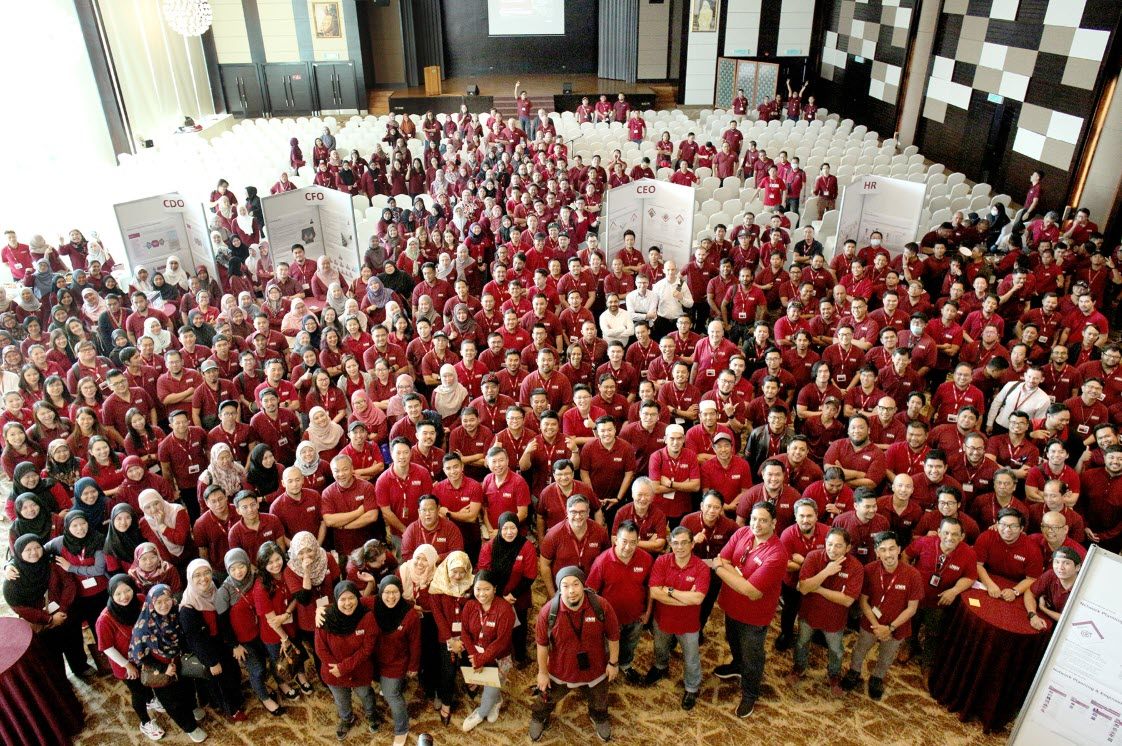
The bare numbers: more than five hundred employees, eight direct reports, an annual budget of a size that makes you double-check the currency on first reading. The mission: modernise the networks of an entire state – merge three legacy mobile networks into one, clear the way for 5G, data centres, cloud, cyber security, and all of it in a model that had no equal worldwide: one infrastructure for all, on which the providers compete fairly. Added to that, a programme of which I am particularly proud to this day: building up local leaders, systematically, with the goal that this company should one day no longer need foreigners like me. In the end, ninety-seven percent of the workforce were Bruneians. There exists an interview with me from that time in the international "CEO Magazine" – the boy from Bad Honnef, ironed flat on glossy paper. My brothers found it, I believe, moderately impressive. Brothers are a reliable antidote to gloss.
Five hundred Bruneians – and one Rhinelander. Spot him.
And politics? Well – I had learned in Uganda that politics finds you. In Brunei it did not even have to search: it sat at the table. The country is ruled by a Sultan, the grand lines of our work followed a national vision, and on our board sat a serving minister. It was the most political role of my life, in a thoroughly hierarchical country, and there was no escaping it: every decision had a technical dimension, a commercial one – and one for which no textbook exists. I learned in those years to move on this parquet, with respect for the country and its rules. More details? You guessed it: curtain.
If sultanate, then properly: the COO in national dress.
Then came the spring of 2020, and the world stood still. For a telephone company, a pandemic is a peculiar event: while everything outside was locking down, our business positively exploded – an entire country moved onto the Internet overnight. Schools had to be able to teach from children's bedrooms from one day to the next, ministries had to function, families wanted at least to see one another on screens. We were needed on every one of these fronts, simultaneously, for months. Professionally it was, with all due gravity, our finest hour: rarely does it become so visible what infrastructure actually exists for.
Privately, the balance looked different. The borders closed, and with them – this one must know – the wine shop: Brunei is a dry country, there is no alcohol, and the occasional glass of wine had until then always meant a drive across the border. Now the border was shut. I will not weigh the great tragedies of those years against my wine rack – but let it be recorded: the COO of the national networks sat high and dry, in every sense.
Did he, though? Necessity is the mother of invention, and a man in possession of an electrical apprenticeship, an engineering degree and pandemic-grade constraints on his evening entertainment will sooner or later discover that, from astonishingly simple ingredients, with a little patience and process engineering, a beverage can be obtained that bears a deceptive resemblance to wine. There are no further details – you know my curtain by now – only this much: it was not even bad. The boy who once converted cassette recorders into data storage had simply repurposed the available hardware one more time.
Something else weighed heavier. In Brunei's hierarchical culture a COO is not merely a manager – he is a father figure, whether he wants to be or not. In the pandemic months the employees came to me, singly and by the dozen, and asked things that appear in no job description: How should I behave? How do I protect my family? For much of it I had no better answer than anyone else – but I learned that listening is sometimes the entire answer. If you ask me today what I do best professionally, I therefore do not say "strategy". Strategies stood at the beginning of every one of my stations, and I have written plenty of them myself, gladly. But what counts always came afterwards: making them come true, and accompanying people through the change – through rebuilds, mergers, pandemics, through every passage in which an organisation is afraid. Nowhere did I learn this as deeply as in Brunei. And it began, as you know, at hospital bedsides in the Rhineland.
And into the middle of those years fell the moment when life reminded me of my fifth chapter: my mother died. I was far away, in a sealed-off country on the other side of the world. The woman who had raised four boys and visited me in Uganda went while her third son was keeping a foreign country on the network. I thought often, in those days, of the people I had accompanied as a young civilian-service orderly, and of how quickly, in the end, it goes.
It so happened that my son was visiting Brunei in exactly those days. On the evening of that day the three of us sat on the terrace – he, my wife and I – looking out at the sea. We held each other's hands and said not a word. Only the tears ran. It is these moments.
I will say no more about it. But it belongs here.
At the end of 2022 the mission was accomplished – the start-up had become the national network operator, and it stood on its own feet. The Brunei chapter closed after four years. My wife and I stood once more before the question that has structured my life the way school holidays structure other people's: where to next?
Chapter 16
Softcore Abroad
This time, the answer had a history. My wife had long wanted to come to Europe – she had once visited me during my Bern period and had evidently never quite renounced Switzerland. And in Zurich there still sat the head of our Swiss country organisation, with whom I had been in good contact for years. The conversation that decided everything was short and, at its core, a friendly slap on the back of the head: "Come to Switzerland. I offered it to you back then. Just do it."
So we just did it. Since 2023 we have lived in Switzerland, and I work as a consultant again – much of it for the federal administration, some for private industry, back in the world of data centres and large infrastructures. And the sentence that runs through this book still holds: what pleases me most is not the moment a strategy is approved, but the day it is finally up and running – and the people who doubted loudest at the beginning have long since come to regard it as their own. That is the finest moment of any transformation. You recognise it by the fact that nobody needs you any more. Those who want particulars will find the official stations on LinkedIn; this book is responsible for the stories in between, and the latest story is unspectacular in a way I believe I have earned: it is beautiful here. It is, compared with almost everything else in this book, almost indecently beautiful here.
Do I still feel the itch? The honest answer: no. The boy from Bad Honnef now has considerably more decades behind him than ahead of him, and the appetite for the next adventure has given way to an appetite for a good view. Switzerland is – let the running gag of this book be employed one last time – genuinely a foreign country for a German. But it is, let us say it openly: softcore abroad. The trains run on time, nobody stops at my car window, and the day's toughest negotiation concerns which mountain gets climbed at the weekend. I settled in quickly; my wife needs a little longer to feel at home, and that is all right – I had thirty years of training. We live well. The litmus test, too, was passed long ago: a billiard table stands within reach, as one has at every place I have called home since I was fifteen.
The technology that has guided me all my life is naturally still here – it has merely swapped roles. The boy who unscrewed radios now leaves the unscrewing to others: at home a smart-home landscape keeps growing, which I extend with the same passion with which I once modified cassette recorders. There is still programming, nowadays side by side with artificial intelligence – the ZX81 needed me; these days it is rather I who assist. I have fallen for the electric car too, with an enthusiasm my brothers smile at mildly – in general I am, by the way, still the brother who takes a shade too much interest in all of it. And the stock market? The inheritance of long ago has descendants: somewhere a small machine is quietly running that I programmed myself and that makes its decisions at night on an exchange on the other side of the world. Earning money by doing nothing – the idea cost me my confirmation money as a teenager and has never let go of me since. The circle closes, and these days it even balances better.
There remains the look back, and it shall be honest. There were dark passages in this story, and I have not told them all: the death I washed as a young man; violence I have seen and do not describe; losses that appear in no chapter. If you ask me whether, knowing what I know today, I would do it all again the same way – yes. Without hesitation. I regret nothing. The account does not balance despite the heavy entries; it balances with them.
And ahead? A few working years still lie before me, and for them I wish myself exciting projects and the opportunity to pass on what has stuck along the way – to clients, but above all to younger colleagues who stand at the beginning today, as clueless and as hungry as I stood before my first day at the office in Ramersdorf in 1997. The finish line is coming into view, and behind it waits a plan that belongs to my wife and that I support with all my heart: retirement, someday, in her homeland – in Indonesia. Java, the ferries, the islands. You will have noticed: the circle is closing again. After the softcore abroad of Switzerland, a little more exoticism would then be on the cards once more. A little more hardcore. One last setting-out.
And the fear? Did I ever learn it?
I did try, honestly. I let radios shock me and transformers awe me, I watched helicopters fall out of the sky in Port Moresby, smelled tear gas in Kampala and looked into gun barrels in Luanda – and was, if I am honest, astonishingly seldom afraid. Perhaps it is still to come. In the fairy tale, the boy learns fear at the very end – at home, from his wife.
Mine sometimes smiles as though she has something prepared.